Prepare for the UNTHINKABLE as if it were the INEVITABLE!

Chin-Na – Vertical Grappling for the Street
Ground fighting is a great strategy for the ring. It allows the grappler to smother, and immobilize the striker. The grappler is able to take the striker out of his fighting range, and reduce the dangers they face in a fight. On the ground, the striker can not develop the power in striking available to him while standing. And if the striker doesn't have an extensive grappling arsenal of his own, chances are that he will be tapping out very quickly.
With the popularity of Mixed-Martial Arts competitions, grappling has become all the rage. Ground and pound, arm locks, triangle chokes, the mount, the guard, all have become common terms in many martial art schools around the world. But, how do these methods translate from the ring to the street?
In the ring there are rules that limit the weapons available to the fighters. Weapons that could easily turn the tide of the fight while on the ground. While the striker has a difficult time developing punching power while on his back with an opponent mounted on top of him, a thumb to the eye doesn't require striking power. As a matter of fact, the eye is such a weak target, rich with nerves, it takes a very small amount of force to create major pain and do extensive damage. Biting is also a very effective weapon in a close quarters encounter such as on the ground, but it too is against the rules of these sporting events.
As you can see, in a real “No Rules” environment, the fight can be quite different than what we see in these competitions. So we must ask, is there a place for grappling in a street environment?
The answer is “yes, definitely! But the strategy of use must be “real world – street oriented” and take into account many factors that are not in existence in the matrix of the sporting arena. While a good grappling system must prepare one for the possibility of being taken to the ground, the terminology here is the key. There is a big difference in being taken to the ground, and TAKING IT to the ground. If you are TAKEN TO the ground it is not intentional on your part. But taking it to the ground implies intention. This is where we must draw the line.
On the ground in the ring there is a padded surface, and only one opponent. On the street, the surface is usually concrete, with obstacles such as curbs, broken glass, weapons of convenience that can be used against you like bricks, and bottles, and let us not forget the possibility of third or more party interventions.
Many in the current ground grappling craze are fond of quoting that 90% of all fights go to the ground. Here is the problem with this statistic. The author worked for over twenty-five years in public safety, serving as a police officer, firefighter and emergency medic. In that career, there were hundreds of responses to street and bar fights. In the emergency setting, on the medical and police reports, there is no data entry for the fight going to the ground, or staying upright. So where does this statistic come from? There is not some guy named Eugene at the U.S. Department of Statistics keeping track of the number of fights that go to the ground. However, this being said, if you consider the number of fights that involve at least one party who is impaired by alcohol and/or drugs, it’s not difficult to believe that many fights do go to the ground. In the words of Wing Chun Grandmaster Samuel Kwok “All fights should go to the ground, at least your opponent should!” It would help for people to remember that 98.3 % of all statistics are made up on the spot with absolutely no statistical data. I just made that up….but it is as valid as the ground fighting statistic that many put their faith in.
The Chinese Martial Arts has a method of grappling that is combat efficient, economical in application, and focuses on “vertical grappling”. Fighting from the ground is not ignored, but the strategy does not intentionally take the fight there. The method is Chin-Na the Chinese art of Capture, Control and Destruction. Chin-Na is the art from which modern systems such as Ju Jitsu, Aikido, and Hapkido have their origin. Chin-Na has many of the same type of techniques you see from some of the Mixed-Martial Arts practitioners but with one very important difference. The focus is on applying the techniques in an upright position and in staying upright in the fight. The methods are meant for real life application in a violent encounter, not sport.
The purpose of Chin-Na is two-fold. One, after capturing the opponent’s limb, damage it very badly and thus render him defenseless. Or two, utilize a locking technique to put the opponent in a position where you can deliver a fight ending strike or kick, and the opponent has no way of defending against the strike. As you can see, both work to achieve the same outcome, a quick efficient and victorious end of the fight. Basically you can think of Chin-Na as Ju Jitsu on steroids, with a very bad attitude.
The Environment as a Weapon
Chin-Na also specializes on using the environment as a weapon against the opponent. As a martial artist one should be acutely aware of their surroundings. There are many things that can be picked up to use as a weapon, and there are also many areas of the landscape that can be used to run the opponent into that can cause him damage. Virginia based Ba Gua instructor and Chin-Na expert Glen Moore explains “If you can’t find something to hit the opponent with, you find something to hit with the opponent!” This is a very good strategy
In the old TV series called “Burn Notice” on Fox network, the main character was a former C.I.A. type agent who uses quite a bit of Chin-Na in the fight scenes. In the premier episode he encounters a couple of bad guys in the restroom of a restaurant. In the narrative of his thoughts running during the fight scene in which he is securing joint locks and running his opponents head first into sinks and urinals he states “I like bathrooms, lots of hard surfaces!”
Unlike the ring, many real world encounters occur in an enclosed environment with obstacles that can be used to your advantage, or against you. Environmental considerations such as stairs, curbs, changes in grade of the fighting surface, corners of walls, windows, mirrors, are just some of the things that can be brought into play in the encounter.
Keep the Main Thing the Main Thing
We need to keep in mind that in Self Defense the "Main Thing" isn't to BEAT the other guy ... It is to Avoid the Altercation Completely, or Escape the Physical Altercation as quickly as possible. If we are "Forced" to deal with the attacker physically, the damage we are "Forced" to inflict is to create an opportunity to safely escape the altercation. We are not "Fighting" we are "Defending Ourselves". We must know the difference and always keep the "Main Thing" the main thing!
Chin-Na - The Art of Capture, Control and Destruction

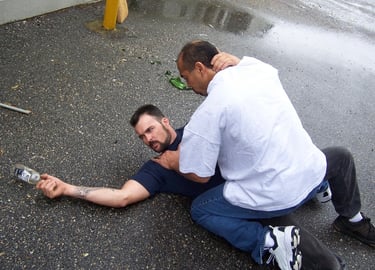

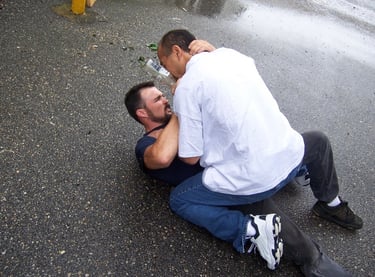

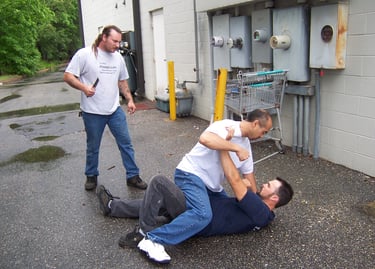
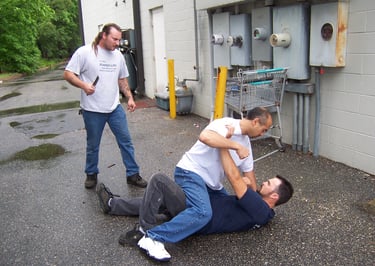
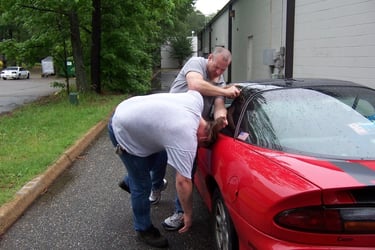


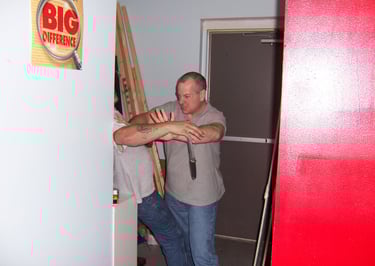


Chin-Na can turn a Bad Situation around in a hurry especially when integrated within the Ultra Efficient Close Rang Wing Chun Methodology.
For More Information
Contact us at:
757-846-1188